


MORPHICK IS NOW A PART OF BOOZ ALLEN HAMILTON
READ THE OFFICIAL ANNOUNCEMENT

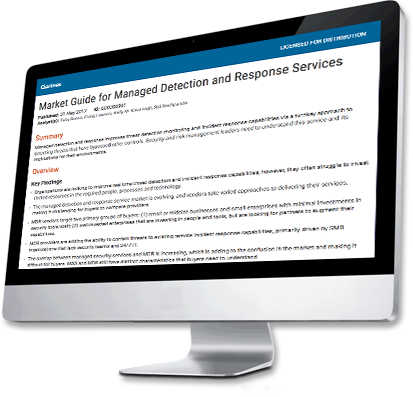
recognizes Morphick as a representative vendor in their Market Guide for Managed Detection and Response Services guide.
Find out more
Facing
Cyber
Threats
Head On
Securing your website is crucial to guarding your data as well as sensitive information from your customers. Taking preventative measures to protect your site can save time and money — and it can also protect your brand reputation.
Cybersecurity attacks and threats have grown in recent years, which makes securing your website all the more important. Security is even more critical for websites with online transactions, such as ecommerce websites, and for websites on widely popular platforms like WordPress.
To secure your website against hackers, you need preventative security measures in place. In this blog, we will examine seven different ways for you to secure your website for free — with everything from free tools to best practices and other tactics to protect your website.
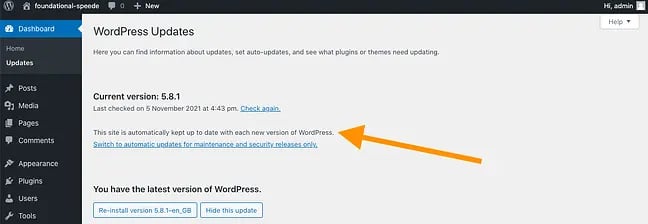 Image Source
To enable auto-update for your WordPress plugins, follow the steps below.
Step 1: Go to Dashboard > Plugins > Installed Plugins.
Step 2: There you will see all of the plugins you have installed so far.
Step 3: Click on the Enable auto-updates link given alongside each plugin.
Similarly, to enable auto-updates for your WordPress theme, follow the steps below.
Step 1: Go to Dashboard > Appearance > Themes.
Step 2: Select a theme (if you have multiple themes installed on your website, you should update all of them).
Step 3: Then click on the link that appears as Enable auto-updates.
Image Source
To enable auto-update for your WordPress plugins, follow the steps below.
Step 1: Go to Dashboard > Plugins > Installed Plugins.
Step 2: There you will see all of the plugins you have installed so far.
Step 3: Click on the Enable auto-updates link given alongside each plugin.
Similarly, to enable auto-updates for your WordPress theme, follow the steps below.
Step 1: Go to Dashboard > Appearance > Themes.
Step 2: Select a theme (if you have multiple themes installed on your website, you should update all of them).
Step 3: Then click on the link that appears as Enable auto-updates.
 Image Source
You should also be careful before installing or integrating any third-party extensions or services. Check the reviews or developer’s authorization before doing so — otherwise you risk installing a vulnerable plugin or component on your site.
Image Source
You should also be careful before installing or integrating any third-party extensions or services. Check the reviews or developer’s authorization before doing so — otherwise you risk installing a vulnerable plugin or component on your site.
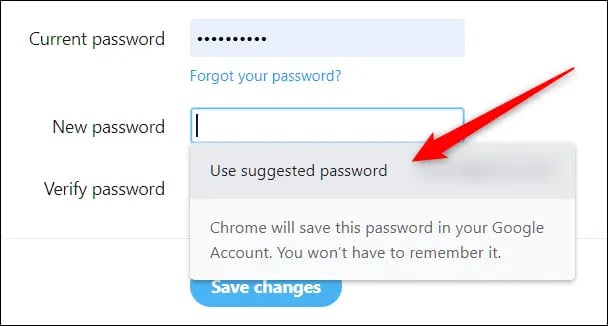 Image Source
You can also use a free password manager like Dashlane to control your passwords on your desktop, laptops, and mobile devices.
Image Source
You can also use a free password manager like Dashlane to control your passwords on your desktop, laptops, and mobile devices.
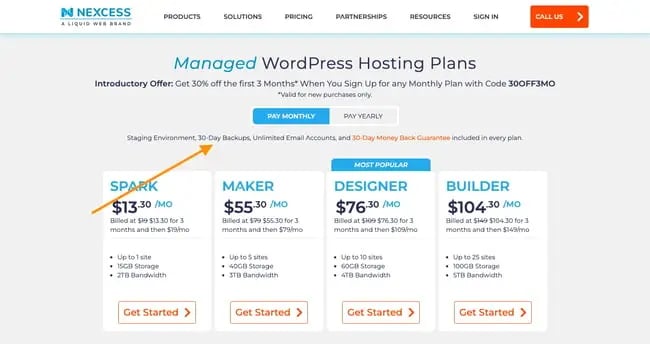 Image Source
For a small website, you can choose a backup plan from your hosting provider. Some of them provide automatic data backups for websites for free, or for a small fee. A big and complex website, on the other hand, requires a huge amount of storage space to save backup data. You can purchase cloud storage to have your data available anytime, anywhere.
If you run your site on WordPress, check out our guide How to Backup Your WordPress Site Manually or With a Plugin for step-by-step instructions.
Image Source
For a small website, you can choose a backup plan from your hosting provider. Some of them provide automatic data backups for websites for free, or for a small fee. A big and complex website, on the other hand, requires a huge amount of storage space to save backup data. You can purchase cloud storage to have your data available anytime, anywhere.
If you run your site on WordPress, check out our guide How to Backup Your WordPress Site Manually or With a Plugin for step-by-step instructions.
 Sucuri is a cyber security company. They can help you to secure a website from several critical security issues, such as malware, spyware, trojan, denial-of-service attack, and hackers.
 SiteGround Security is a free security plugin for WordPress and comes packed with premium security features to keep your websites protected. Users can enjoy tools and features that prevent brute-force attacks, compromised logins, data leaks, malware, and more. The plugin is easy to install and set up and comes with comprehensive monitoring and weekly security reports.As organizations become more distributed and telework becomes more common, the endpoint has become a vital component of enterprise cybersecurity. If a teleworker’s computer is compromised by an attacker, they can take advantage of that access to steal sensitive information from that device or use its connection to the enterprise network to gain access to corporate systems and data.
Endpoints not protected by endpoint detection and response (EDR) are not truly secured against modern threats. The threat hunting, incident response, and reporting capabilities of EDR are essential to protecting against modern cybersecurity threats and overcoming cybersecurity challenges.
Although managed detection and response services haven’t been around that long, the industry has already reached a value of about $5 billion.
However, this industry is growing at an incredible growth rate of more than 18% every year and is expected to maintain that at least until 2030. At that rate, the industry will more than quadruple in size between 2021 and 2030!
That is an absolutely staggering rate of growth. What is it about MDR services that is causing such an incredible rise in demand for them? There are a lot of reasons why companies are investing more in quality cyber security than ever before.
Many businesses have been harmed by online cyber-attacks. Others are so busy keeping themselves safe that they do not have time to focus on growing. However, the right MDR services can keep you safe and help you take your business to the next level.
Read on to learn all about managed detection and response services and what they might be able to do for your company!
SiteGround Security is a free security plugin for WordPress and comes packed with premium security features to keep your websites protected. Users can enjoy tools and features that prevent brute-force attacks, compromised logins, data leaks, malware, and more. The plugin is easy to install and set up and comes with comprehensive monitoring and weekly security reports.As organizations become more distributed and telework becomes more common, the endpoint has become a vital component of enterprise cybersecurity. If a teleworker’s computer is compromised by an attacker, they can take advantage of that access to steal sensitive information from that device or use its connection to the enterprise network to gain access to corporate systems and data.
Endpoints not protected by endpoint detection and response (EDR) are not truly secured against modern threats. The threat hunting, incident response, and reporting capabilities of EDR are essential to protecting against modern cybersecurity threats and overcoming cybersecurity challenges.
Although managed detection and response services haven’t been around that long, the industry has already reached a value of about $5 billion.
However, this industry is growing at an incredible growth rate of more than 18% every year and is expected to maintain that at least until 2030. At that rate, the industry will more than quadruple in size between 2021 and 2030!
That is an absolutely staggering rate of growth. What is it about MDR services that is causing such an incredible rise in demand for them? There are a lot of reasons why companies are investing more in quality cyber security than ever before.
Many businesses have been harmed by online cyber-attacks. Others are so busy keeping themselves safe that they do not have time to focus on growing. However, the right MDR services can keep you safe and help you take your business to the next level.
Read on to learn all about managed detection and response services and what they might be able to do for your company!

1. Install an SSL certificate.
SSL, also known as Secure Sockets Layer, is a protocol that creates an encrypted link between a web server and a web browser. That means any data exchanged between a visitor and website will be secure. Having an SSL certificate for your WordPress website is a must — especially if you are running an ecommerce store. The SSL certificate will help protect your customers’ sensitive payment information. Fortunately, you do not need any technical knowledge to have your website secured with SSL. You can easily get an SSL certificate from a hosting provider, domain registrar, or certificate authority (CA). While the prices vary, you can get an SSL certificate for free. Many hosting companies provide them for free in their hosting packages. For example, if you host your website on HubSpot’s Content Hub, you can secure your content and lead data with a free standard SSL. If your hosting provider does not, then you can get an SSL certificate for free from CAs like Let’s Encrypt. You can find a list of free or low-cost SSL certificate authorities here.2. Update your site regularly.
Outdated software can put your website at risk for viruses, cyber attacks, and other security issues. To help avoid these problems, keep your website up-to-date by regularly checking for any updates or setting up auto-updates. These updates usually contain security patches from developers so it’s essential to make them as soon as possible. If you’re on WordPress, many hosting providers offer managed hosting, which takes care of updates for you. For the WordPress core, themes, and plugins, you can choose a built-in option from WordPress which enables auto-updates.How to Enable Auto-Updates on WordPress
To enable auto-update for your WordPress core software, follow the steps below. Step 1: Go to Dashboard > Updates. Step 2: Click on the Enable automatic updates for all new versions of WordPress link.
Image Source
To enable auto-update for your WordPress plugins, follow the steps below.
Step 1: Go to Dashboard > Plugins > Installed Plugins.
Step 2: There you will see all of the plugins you have installed so far.
Step 3: Click on the Enable auto-updates link given alongside each plugin.
Similarly, to enable auto-updates for your WordPress theme, follow the steps below.
Step 1: Go to Dashboard > Appearance > Themes.
Step 2: Select a theme (if you have multiple themes installed on your website, you should update all of them).
Step 3: Then click on the link that appears as Enable auto-updates.
Image Source
You should also be careful before installing or integrating any third-party extensions or services. Check the reviews or developer’s authorization before doing so — otherwise you risk installing a vulnerable plugin or component on your site.
3. Use strong passwords.
Using simple passwords like common words, number sequences, your name, or the name of your website is like inviting hackers into your home. These sorts of passwords make it easy to hack into your website. Using strong passwords is a simple, free way to protect your website. Strong passwords include:- A combination of alphabetical and numerical characters
- Capital as well as lower case letters
- Special characters
Image Source
You can also use a free password manager like Dashlane to control your passwords on your desktop, laptops, and mobile devices.
Add in Two-Factor Authentication
Two-factor authentication (2FA) is a security layer that strengthens your website’s security. Two-factor authentication works with two different kinds of structures to prevent a malicious hacker from getting access to your website. The security layer binds your password with a text code, facial or retina recognition, or with your fingerprint as a dual-sided puzzle. Your fingerprint or retina can be captured through a scanner on your mobile device. Anyone who tries to break into your website will have to solve both puzzles. Two-factor authentication is not a flawless system — but it will improve a website’s security. You can set up 2FA on your site for free for a limited number of users with providers like DUO.4. Back up your site regularly.
Creating routine backups of your website is not a proactive approach to website security — but it is essential in cases of malicious attacks, hardware failure, or natural disasters. Having a backup of your site means that it can be restored in no time. Without a backup, you risk losing all your data, customizations, and settings. You can create a backup of your website’s core files, media, non-media content, and databases too. Backups will save you the time, money, and effort required in dealing with data loss. You can create backups manually, with a tool, or rely on your hosting provider to do so. Most tools and hosting providers will let you schedule and automate backups. Nexcess, for example, includes 30-day backups in all its WordPress managed hosting plans.
Image Source
For a small website, you can choose a backup plan from your hosting provider. Some of them provide automatic data backups for websites for free, or for a small fee. A big and complex website, on the other hand, requires a huge amount of storage space to save backup data. You can purchase cloud storage to have your data available anytime, anywhere.
If you run your site on WordPress, check out our guide How to Backup Your WordPress Site Manually or With a Plugin for step-by-step instructions.
5. Train your staff.
Even the top cyber security companies can be fooled by smart hackers, but sometimes the culprit is found among untrained staff members. Your employees might be the best of the best in their field but they can still make innocent mistakes that open the gates for attacks and viruses. To avoid these kinds of mistakes, you must train your employees to look out for suspicious activity and beware of clicking any dubious links or emails from unknown senders. Phishing attacks in particular can cause employees to give unauthorized access to sensitive data, such as email addresses, phone numbers, login data, and credit/debit information. Run a cyber security awareness training program within your organization to guide your team members on how they can protect the data of the company and its customers.6. Scan, scan, scan.
Regularly scanning your site can ensure you detect any issues or threats before they cause serious damage to your visitor’s user experience or to your brand reputation. There are several free website malware scanning services available, including: Besides choosing an independent security software, plugin, addon, or company, you can opt for a hosting company that provides malware and virus scanning services for their customers. This option is best for non-ecommerce websites where financial transactions are not made through the website. Namecheap and Hostwinds are ideal hosting providers for all types of web applications since they have a built-in scanner for malicious activities. WPX and WP Engine are also great for WordPress websites.7. Use security tools.
You can also secure your website by using free tools. Below we’ll look at some of the most essential security tools that are available and offer both free and premium plans.Sucuri
Sucuri is a cyber security company. They can help you to secure a website from several critical security issues, such as malware, spyware, trojan, denial-of-service attack, and hackers.
SiteGround Security
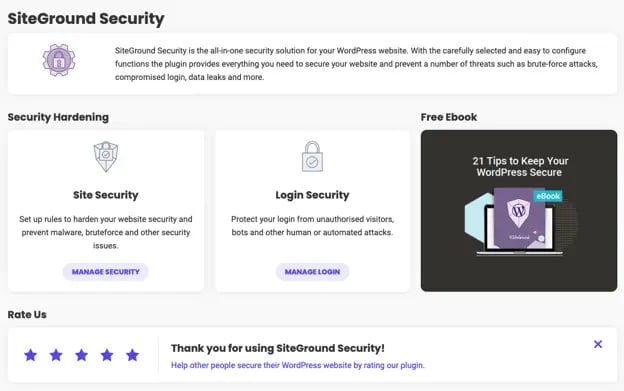
SiteGround Security is a free security plugin for WordPress and comes packed with premium security features to keep your websites protected. Users can enjoy tools and features that prevent brute-force attacks, compromised logins, data leaks, malware, and more. The plugin is easy to install and set up and comes with comprehensive monitoring and weekly security reports.As organizations become more distributed and telework becomes more common, the endpoint has become a vital component of enterprise cybersecurity. If a teleworker’s computer is compromised by an attacker, they can take advantage of that access to steal sensitive information from that device or use its connection to the enterprise network to gain access to corporate systems and data.
Endpoints not protected by endpoint detection and response (EDR) are not truly secured against modern threats. The threat hunting, incident response, and reporting capabilities of EDR are essential to protecting against modern cybersecurity threats and overcoming cybersecurity challenges.
Modern Cybersecurity Challenges
Organizations’ security teams are facing an array of cybersecurity challenges that impact their ability to protect the enterprise, and two of the biggest challenges are the security implications of increased telework and the cybersecurity skills shortage. Both of these make monitoring and securing the endpoint more complex, driving the need for increased endpoint security.The Rise of Remote Work
Employees working from home introduce new cybersecurity risks than ones working in the office. Some examples of differences between securing employees working in the office and remotely include:- Use of Personal Devices: Many organizations were not prepared to support a mostly or wholly remote workforce. As a result, many employees are working from personal devices that lack corporate cybersecurity solutions and are likely non-compliant with corporate security policies.
- Imperfectly Placed Security: Traditional approaches to security place cybersecurity solutions at the perimeter of the on-premises network and route all traffic through these defenses. With a remote workforce that often connects to cloud-based security solutions, perimeter-focused security either sacrifices network usability (due to inefficient routing) or security (if employees connect directly to the public Internet.
- Remote Incident Response: Traditionally, incident response teams have had the ability to respond in-person to security incidents if needed. With a remote workforce, these incident responders may need to rely upon untrained employees for critical response operations, potentially slowing or compromising the effectiveness of incident response.
The Cybersecurity Skills Shortage
The cybersecurity industry is experiencing a significant skills shortage. While the demand for cybersecurity talent is growing, the supply is not keeping up. This is true both in terms of the overall number of cybersecurity personnel available (resulting in unfilled positions) and the lack of access to certain specialties. As a result, organizations’ security teams are consistently understaffed and underskilled, making it difficult to effectively monitor and protect the corporate IT infrastructure against cyber threats. The fact that many organizations are relying on an array of disconnected and standalone security solutions only serves to exacerbate this problem. As a result, analysts receive more alerts than they can handle and cannot always effectively weed out the false positives from the true threats.The Guiding Principles of EDR
EDR is designed to provide comprehensive endpoint protection against cyber threats. To do so effectively, an EDR solution must be designed based upon these principles:- A Prevention-First Approach: Preventing an attack is always less expensive and damaging than attempting to remediate it after the fact. An EDR solution should attempt to identify and block potential threats before they reach or achieve execution on the target system.
- AI-Driven Multi-Layered Security: Cyberattacks are growing more complex and sophisticated. The use of AI and multi-layered inspection is essential to identifying and protecting against the latest fast-moving threats.
- Post-Infection Remediation and Recovery: Not all attacks can be prevented, and a rapid and correct response is vital to minimizing the impact and cost of the incident. Integrated remediation and recovery capabilities in an EDR solution are essential to achieving this.
- Consolidated Security and Threat Intelligence Architecture: Managing multiple solutions from multiple vendors is complex and degrades the effectiveness of the enterprise security team. A single, consolidated security platform is vital to maximizing security effectiveness.
- Unified and Cloud-Based Management: Configuration and management of security solutions takes away resources from protecting against real-world threats. A unified and cloud-based management program simplifies operations and scales with the organization.
What Effective EDR Can Provide
Effective endpoint security is a core component of the modern enterprise’s cybersecurity program. This solution should offer:- Anti-Phishing Protection
- Anti-Ransomware Protection
- Content Disarm and Reconstruction (CDR)
- Anti-Bot Capabilities
- Post-Breach Detection, Remediation, and Response
What Are Managed Detection and Response Services?
As the name suggests, MDR services both detect threats and respond to them. That means that they monitor all of your systems to detect cyber attacks if they ever occur. Then, they provide a customized response to provide you with maximum protection. Because these services are also managed, that means that you can enjoy these benefits without having to participate in the monitoring and management process yourself. When a company hires MDR services, company leaders can focus on getting their jobs done and leave cyber protection to their managed detection and response services.What Can These Services Do for Your Business Security?
But how exactly do MDR services provide these benefits? MDR services combine several basic defensive capabilities. By putting them all together, they can provide an amazing degree of protection. One of the most important things that MDR companies do is help businesses learn to detect potential cyber threats. This provides several benefits. When a potential alert comes in, it is as important not to respond to false threats as it is to take rapid action to respond to real threats. Many companies waste a lot of time worrying about fake threats because it is not always easy to tell what is a fluke and what might be an attack. MDR services use their expertise in this area to help companies stop responding to false alarms. That alone can save some companies an enormous amount of time. Of course, MDR services also help companies identify the truth that threats among the flukes. On top of that, they can help companies rank order potential security vulnerabilities so that they can prioritize security concerns in the right order.Customized Responses
Once that is done, the process of responding to threats begins. There are a lot of automatic protection tools that you can use to respond to threats. However, many companies make the mistake of relying only on such automatic tools. The problem with this strategy is that cybercriminals also know all about these kinds of defenses. In fact, cybercrime is a constant arms race between people who build protections against cybercrime and criminals who try to figure out how to get around those protections. If a cybercriminal knows how to evade your automatic defenses, then you will need an extra level of threat response. That is where MDR services can come in handy. They can start by applying automatic security defenses to see which cyber threats those tools can handle. However, they can then follow up by responding to whichever threats remain. In some cases, quality MDR services can also figure out exactly how far a security threat progressed before being stopped. Some people think that they have managed a security threat only to find out later that they left something unresolved. The clearer perspective provided by MDR investigations provides much more thorough safety.Resolving Threats
Once you have all of this information ready, MDR services can put together a custom plan to resolve every aspect of each cyber threat. Many aspects of these plans will resemble the responses they have used on threats in the past. MDR companies work with a huge variety of businesses. That means that they end up seeing almost every kind of security threat. When your company faces such a threat, your MDR services will probably have already responded to similar threats many times in the past. That also means that they have polished their responses for maximum efficacy. When you hire MDR services, you can be the beneficiary of all of this expertise. Once your MDR services have a response plan, they will execute it. However, they will also finish up by verifying that every aspect of their execution went according to plan. They will verify that your data is secure, any malware is erased, and there are no easy entries for future attacks.The Rise of Online Security Threats
However, many company leaders still do not appreciate why these kinds of protections are becoming so popular so fast. After all, if you have never been the victim of a serious cyber attack before, maybe you do not need such protections, right? Of course, the answer is that no one knows for sure. It is always possible that you will get lucky and never be the target of a cybercrime. However, the odds of that being true are getting lower with every passing year. Unfortunately, all of the numbers show that cybercrime is growing at an incredible rate. More businesses are being targeted than ever before. On top of that, cybercriminals are even beginning to target hospitals and government institutions. It is becoming more common for cybercriminals to use ransomware on their targets. Ransomware is a type of malware that finds your most essential data files. Then, it copies them and sends the copy to another server where you cannot access it. Ransomware finishes the job by deleting the files on your own systems. If you do not have a way to resolve this problem, you can permanently lose all of your essential data. This can be debilitating to businesses, hospitals, and individuals alike. It also means that almost anyone can be a target of cybercrime now. So many criminals are using cyber attacks just to extract money from victims. Most ransomware attacks come with a demand for payment if the victim wants to get their files back. Many companies and people feel that they have no choice but to comply. Of course, that only makes it more likely that cybercriminals will continue to target people and institutions for as long as it works for them.Cybercrime Is Getting Easier
But why is there such a dramatic rise in ransomware and other kinds of cybercrime right now? The main cause is our growing familiarity with technology. In the past, you had to be a technical expert to become a cybercriminal. At the same time, anyone who was a technical expert also had the option of making their living in a legitimate way. This dynamic kept the total number of cybercriminals down. However, cybercriminals are now working on making their techniques more accessible to other criminals. These days, almost anyone can figure out how to run a ransomware attack regardless of their level of technical skill. That is opening the door for more cybercriminals. This dynamic is only exacerbated by the increasing globalization of the world. People now have to worry about being the victim of a cyber attack from any criminal on the planet. Unfortunately, this is probably not going to be the end of increasing cybercriminal activity. At some point, our society’s defenses against this kind of criminal behavior will get stronger. At that point, it will be less profitable to become a cybercriminal. The fact that the MDR market is expected to quadruple in size over the next few years is a promising sign that we are increasing our defenses. On the other hand, criminal techniques are also getting more powerful. We have not even begun to see how criminals will weaponize artificial intelligence to help them execute their scams. At the end of the day, businesses are facing a greater threat from cyber attacks than ever before. Although companies with MDR services might be able to weather the storm, those without them may find themselves the target of more and more attacks as technology progresses.Make Your Business a Poor Target for Hackers
There are multiple ways that MDR services can protect you. Many people fail to appreciate how effective it can be to add an extra layer of defense. They reason that criminals can always go to the extra effort of overcoming such defenses. However, just because criminals could try to do that does not mean that they will. After all, it is much more efficient for criminals to target the easiest victims. Why would they bother coming up with more powerful attacks to overwhelm the defenses of a company with powerful MDR protection? In fact, this may be one of the ways that criminals use artificial intelligence to target their attacks. People can now use artificial intelligence to quickly sort through huge quantities of data. Criminals might use such tools to make a list of the most vulnerable victims. As a result, companies with added protections may not even end up on the target list.Handle Data Breaches With Maximum Efficiency
Of course, if you do happen to be the target of an attack, your MDR services should be more than up to the task of protecting you. Because they are constantly monitoring threats, they can resolve your cyber attack concerns as soon as possible. That way, the rise of cybercrime does not have to prevent you from focusing on your normal business operations.Choosing the Right Service for Your Business
Considering how fast the MDR market is growing, there are of course many MDR companies to choose between. How can you know which service is the right choice for your own needs? In many cases, it can help to look at reviews from other MDR clients. The more satisfied an MDR company’s other clients are, the better the chance that you will be satisfied with their protection as well. You might also consider reaching out to anyone you know who has experience with MDR services. They might be able to tell you what they like and don’t like about their own provider. Depending on how much they know, they might be able to recommend against certain companies. All of this can help you narrow your options to the best few MDR companies for you. Since you can hire MDR services from anywhere in the world, it is essential that you have a plan for paring down your candidate list. Sometimes, the best strategy is to call up a company and learn about what they have to offer and then decide how you will proceed with your selection process from there.Understand the Biggest Benefits of Hiring MDR Services
The more that you understand about MDR services, the easier it is to appreciate why the industry is exploding the way that it is. With the rise of online security threats, this may be the most important time in history for businesses to invest in robust security measures. With managed detection and response services on your side, you can stop worrying about cyber threats and focus on making your business succeed!Security operations solutions are now essential to stopping today’s cyber threats. As cyber attacks evolve and sophisticate, cybersecurity must also change to prevent major incidents and data breaches. Defending against current threat actors requires a dynamic, adaptable approach that’s as evolved as cybercriminals’ tactics. While there’s a plethora of tools on the market that can help organizations track data, detect threats, and even utilize artificial intelligence (AI) to map events across their environment, a tool is only as effective as the human utilizing it. With security architecture only increasing in complexity, and organizations perennially struggling to keep security expertise in-house — 68% of organizations identify staffing related issues as the number one threat to achieving their objectives — it’s become clear that tools alone won’t keep organizations secure. That’s where managed detection and response (MDR) changes the game. Gartner predicts that, “by 2025, 60% of organizations will be actively using remote threat disruption and containment capabilities delivered directly by MDR providers, up from 30% today.” That’s a major increase in use, and for good reason. A solution that takes an operational approach, combining the best in technology with the expertise and adaptability of humans allows organizations to not only detect threats, but respond to them swiftly while working to proactively harden their attack surface over time. Before diving into the details, it’s important to note that MDR and a security operations center (SOC) are not interchangeable. Whereas a SOC consists solely of an internal or third-party team and their processes for protecting an organization, an MDR solution combines a SOC with monitoring and detection technology. An external SOC is part of MDR’s offering, but not the entirety of it. Now, let’s look at exactly why MDR represents the future of cybersecurity and how organizations can take advantage of these capabilities.What To Look for in an MDR Solution
- A Dedicated Security Team Every business has its own unique processes, goals, and security concerns. By investing in an outsourced security team, an organization can ensure that their cybersecurity is managed by trained experts who understand the specific network environment and organizational business risks — and who can adapt goals as those needs change over time.In addition, it’s not news that the security skills gap continues to plague organizations’ security and IT departments. Recent data shows that organizations would each need to hire between 5-10 employees to fill their security skills gap. Outsourcing allows organizations to stay secure without having to strain their budget or rely on inexperienced, overworked experts in-house. A strong MDR solution will be human led, providing 24×7 eyes-on-glass and response to serious alerts.A major difference between MDR and a managed SIEM or a managed extended detection and response (mXDR) solution is, in MDR, the human element is comprised of trained security engineers who actively monitor and work with your organization’s applications and attack surface. More than managing tools, this team is actively monitoring the environment, detecting threats, and leading the response.
- Continuous Security MonitoringVisibility is critical to a strong cybersecurity strategy, and visibility means both the ability to see and gain insights into the full environment, while also making sure that eyes are watching the environment 24×7 — especially since threat actors aren’t known to keep office hours.Through continuous monitoring, an MDR security team can quickly recognize abnormal activity, reliably identify threats, and take immediate measures to keep threats out of a system, even at hours when the rest of an organization’s IT team is getting a good night’s sleep.
- Personalized, Customizable Security RulesThe top MDR solution providers use a customizable rules engine to define security policies for each customer. This engine allows the provider’s security engineers to apply exact security and operational policies, and then update them to align with changing business needs, new and evolving threats, and any applicable rules and regulations.Using a set of customized security rules, an MDR team can selectively filter out noisy events that represent no real security risk, allowing them to stay focused on detecting both known and unknown threats. While other SOC-focused tools, notably SIEM solutions, have the ability to customize alerts, MDR solutions utilize their security teams to fine-tune and adjust the alerting and security rules as needed, saving the organization time and resources. Alert fatigue is costly, and by utilizing new methods like machine learning, MDR solutions are eliminating false positives and setting organizations up for security success.
- Artificial Intelligence and Machine Learning CapabilitiesWhile the use of artificial intelligence (AI) and machine learning (ML) in cybersecurity is not new, the rapid interest and adoption certainly is. According to a recent survey by Arctic Wolf, “98% of respondents plan to allocate some portion of their upcoming cybersecurity budget towards AI,” and “64% of respondents indicated that their organization is highly likely to adopt an AI-centric solution.”The fact is, it’s impossible for humans alone to analyze the massive amounts of log data coming from even the most modest IT environments organizations have. The only way to efficiently and effectively analyze high volumes of log data is by augmenting human expertise with machine learning algorithms. A next-generation MDR provider leverages the agility and adaptability of cybersecurity experts alongside AI and ML to filter out false positives and fine-tune algorithms as new threats are detected, making sure that your security system is an accurate reflection of your business’s policies and risk assessments. The pairing of technology and human expertise puts MDR solutions a step above traditional monitoring tools.
- Cloud Threat Monitoring and Detection CapabilitiesCloud-based technology applications are now mainstream and essential for business productivity, with 99% of organization s utilizing at least one form of the public or private cloud. So, modern IT environments need MDR solution with integrated cloud monitoring to ensure there are no security blind spots.Cloud security has become a top concern for organization leaders, with 48% of leaders citing a cloud-based data breach as their top concern. A strong cloud monitoring system will monitor internet-as-a-service (IaaS), software-as-a-service (SaaS), and security-as-a-service (SECaaS) solutions. Using APIs, virtual sensors can provide near-real-time monitoring of cloud resources and user behavior to ensure they comply with an organization’s security policies and are free from threats. While other tools may take to the cloud, many, like traditional SIEM solutions, are not configured to accurately secure an organization’s cloud environment. MDR solutions, however, are now becoming not only cloud-capable, but cloud-native, ingesting and analyzing the cloud environment as they would on-premises applications.
- Compliance ReportingGood regulatory compliance typically results from good security practices. With online data privacy concerns at an all-time high, keeping customers’ and employees’ personally identifiable information protected is crucial for organizations across industries.Data thefts and security breaches can lead to heavy fines, class-action lawsuits, and reputation damage for organizations that don’t stay compliant. An MDR provider should offer experience and guidance that enhances automated systems, allowing organizations to meet various regulatory obligations and demonstrate compliance.
- Workflow IntegrationA successful cybersecurity plan requires smooth, non-disruptive interaction with the rest of a system process . MDR providers should offer onsite workflow integration tools that optimize operational efficiencies and establish a seamless process for trouble ticketing.Reliable workflow integration ensures that alerts are prioritized, properly escalated, and put in front of the right people, so that issues can be remediated by an internal IT staff before they become a larger problem.
- Log Data Collection/CorrelationComprehensive, user-friendly log management is important for organizations to understand their security environment and make better security decisions. MDR solutions provide this capability, including the automatic collection, aggregation, and retention of log data. This collection can not only assist with compliance needs, but the accurate collection and correlation can make a major impact when investigating a potential threat or when a digital forensics expert is investigating an environment during an incident.
- Scalable Data ArchitectureNo organization is static, so security and operational needs are always evolving based on external and internal factors. Because of outside management, predictable pricing, and flexible capabilities, MDR solutions can evolve alongside your organization.A strong MDR solution should have security-optimized data architecture that can unify the ingestion, parsing, and analysis of log data, and which can also dynamically scale, compute, and store resources on demand. A scalable cybersecurity architecture forms a strong foundation on which to build the analytics that give security analysts deep visibility into advanced threats. Scalable data architecture also provides on-demand access to relevant data for incident investigation and is immediately operational with no setup time.
- Addresses Both Modern Threats and Responds to Modern InfrastructureThe key reason MDR is gaining momentum in the cybersecurity market is because it’s purposefully designed for this modern age where hybrid work models meet rapidly digitizing organizations. Threats evolve, work models evolve, and MDR is there every step of the way.According to Gartner, “Modern infrastructure includes the use of SaaS, IaaS, third-party subscriptions, open-source tools and a wide variety of internally developed applications. The traditional model of on-premises devices, boundary firewalls and business-specific endpoint devices is beginning to fade. MDR buyers must demand compatibility for the areas of their infrastructure that are most critical to their mission.” This also includes the monitoring of identities within the environment, as the modern organization is defined more by users and their behavior than it is by endpoints and firewalls. It’s important to look for an MDR provider that is not only vendor neutral but can provide truly broad visibility across the most vital elements of an environment.
Environmental threat detection
First, as mentioned above, the main goal of MDR is to aid in detecting cybersecurity threats in a particular environment. To this end, this system performs a series of functions including analyzing the types of risks that your organization may be exposed to. This can enable you to determine exactly what the most critical threats are. Using MDR, companies are able to gauge which threats are more serious. This allows you to take preemptive steps to close those doors to cyber thieves. Preventing just one attack can save you millions of dollars.Makes threat detention faster
By making the organization aware of the threats they face, MDR makes threat detection simpler. Since MDR enhances threat analysis, your business can fully understand exactly which cybersecurity threats you face. Imagine being able to act before a breach occurs. You can take action today and avoid a nightmare tomorrow. With MDR, your company can quickly assess its level of security and take action right away.Increases ability to respond to threats
MDR enhances the capabilities of organizations that use it to respond to cybersecurity threats. Preparation is everything when dealing with hackers and cyber thieves. Your organization needs to be prepared for every type of threat, from ransomware and hacking to data leaks. Having greater knowledge of those threats that pose the biggest risk helps you to respond with more precision. Anticipate threats before they happen. Define those weaker areas and eliminate them.Enhances threat prevention
An ounce of prevention is better than a pound of cure, they say. This holds true especially when millions of dollars are at stake. The impact of cybersecurity in our world today is far-reaching. Every year, cyber breaches cost businesses millions of dollars. They damage your reputation and slow your forward progress. With MDR, threat prevention becomes your greatest ally. Proactive security monitoring can apply proven rules to your security system, thus offering a new level of breach management.Do we really need MDR?
Many business owners feel frustrated by the sheer number of cyber breaches occurring each day. It seems that the criminals have the upper hand and there’s nothing we can do to stop them. MDR allows you to take back control of your data security. It’s a reliable system that focuses on one thing: preventing cyber breaches from occurring. The threat of cyber-attacks is ever looming. Thieves are constantly finding new ways to get through any crack or hole in your security system. And, their methods are getting more and more sophisticated as the days go by. The whole cyber security industry evolves at such a fast pace that most business owners are unable to keep up with it. This fact leaves you at a distinct disadvantage.Final thoughts
Though the intricacies of MDR may be somewhat complex, it is important to remember the advantages of this system. With MDR in place, you can avoid being the next victim and sleep much better at night. For business owners, peace of mind is priceless. You can focus on running your company once again and take pride in your accomplishments.In the ever-changing technology environment one thing remains the same – the cyber threat landscape continues to be dynamic and a primary area of risk for business owners. Cyber criminals do not discriminate who they target, and the increase of attacks is a constant threat to many small to-medium businesses, their vendors, and their partners. Keeping up with cyber threats and attack methods can be overwhelming, even when you are a security expert. No matter the size or industry, your business and your systems need to be secure 24/7. But who has the time or can afford the people needed, especially considering todays employment market? Enter, MDR solutions.What is MDR
MDR stands for Managed Detection and Response. This is a service providing real-time threat detection, threat hunting and an active response 24 hours a day, 365 days a year. It is designed to help businesses strengthen their current security monitoring capabilities to address gaps in threat detection. Not all MDR solutions are created equal, there are many nuances to the products themselves and no one single product can prevent a security incident, there is still a need for multiple products working together to achieve the greatest reduction in risk for a business. The technologies themselves, when setup properly, can only do so much on their own and the other important pieces need a highly trained person to take it the rest of the way. So, when we talk about the word Managed, we are referring to the dedicated team of experts that are behind you 100% of the time. This team has extensive knowledge and experience in cybersecurity and ethical hacking so you can rest assured your systems are monitored by the right people. If a threat is detected by the tools, the technology and the team will respond immediately to work through the security incident.Value to You and Your Business
MDR equips businesses with not only detection, but also a quick response to threats and attacks. On average, it takes approximately 146 days to detect a breach (BlackPoint Cyber). MDR technology is constantly evolving and learning to improve intrusion and enumeration detection. With MDR there is an immediate response and the threat is isolated to prevent a lateral spread from occurring – which happens to be one of the most critical phases in the hacker timeline. To truly understand the importance of a quick response you need to understand the hacker timeline. This is how the hacker moves before, during and after their attack and can be thought of in 5 phases. It consists of:- Planning – the phase where the hacker researches and collects information on their target and plan the type of attack they will conduct.
- Intrusion – At this point the hacker gains unauthorized access into their targets systems. Common types of ways hackers get in is through spear phishing, insider threats, or exploiting vulnerabilities.
- Enumeration – This is where the hacker establishes a number of things in the targeted environment. They will make themselves hidden so it is hard to recognize they are watching the system and looking to steal credentials to get additional access to systems.
- Lateral Movement – At this time the hacker will steal data and distribute malware as they move from system to system.
- Completion of Objective – Once the malware has been successfully deployed the hacker will delete any backups and corrupt files, making it hard for the team to get the system working again.
Why is it Important
The cost of a breach can be crippling when it comes to data loss, time, and the ransom payment. Not only is paying ransom a hard-hitting financial cost, if the stolen data is made public, the cost to your business’s reputation could be detrimental to the livelihood going forward. One cyber attack alone can put a small – to medium sized company out of business if there is significant damage to their systems and reputation. More and more businesses are investing in MDR solutions to address a widening IT security skill gap, increasing complexities in the modern technology environment and to have coverage outside of regular business hours. Today, most cyber liability insurance policies are now asking if your company has this, if not, your risk score and premiums are most certainly higher as well. With MDR you can rest assured knowing that your systems are being monitored closely by a team of experts working to protect your business 24 hours a day, 7 days a week, 365 days a year and you’ll be paying a lower insurance premium because of it. Managed, Detection and Response solutions can help save your company from catastrophe when an cyber-attack occurs.Managed detection and response (MDR) is quickly becoming crucial for businesses looking to bolster cybersecurity efforts. MDR seamlessly integrates advanced tech tools with human expertise to identify and address threats. As cybersecurity threats grow in complexity and scale, organizations benefit from the specialized expertise and round-the-clock coverage offered by MDR. To help you better understand managed detection and response services, let’s explore this concept deeper and uncover some key benefits that this approach to cybersecurity offers your organization.Understanding Managed Detection and Response
Managed detection and response (MDR) is a comprehensive approach to cybersecurity that safeguards organizations from an ever-expanding list of digital threats. These services combine technology and human expertise to perform tasks such as threat hunting, monitoring, and response. With cybercrime-related costs expected to eclipse $8 trillion in 2025, these types of holistic approaches are becoming increasingly important to everyday business operations. From malware attacks to phishing attempts, today’s modern organizations need next-level security solutions to stay safe, and MDR is an integral part of shoring up security efforts. But, relative to other security solutions, what makes MDR unique? Let’s explore some key differentiators:- Integrated Approach – MDR isn’t only about technology; it’s about combining tech solutions with real human expertise.
- Beyond Traditional Monitoring – Unlike conventional security solutions, which primarily focus on monitoring and alerts, MDR actively manages and responds to threats.
- Endpoint Emphasis – Most security services monitor network traffic or infrastructure, while MDR tends to focus heavily on endpoints like IoT devices and workstations.
- Real-Time Threat Intelligence – MDR services leverage the power of up-to-the-minute threat intelligence, staying aware of the latest trends, tactics, and techniques.
- 24/7 Coverage – Cyber threats don’t adhere to regular business hours. That is why MDR services offer round-the-clock surveillance.
Top Benefits of Managed Detection and Response (MDR)
Detecting and containing threats is mission-critical. MDR services offer businesses reliable and sustainable ways to combat the ever-evolving threat landscape. To put this value into perspective, let’s take a look at a highly-regulated industry that deals in sensitive data: finance. When a financial services organization experiences a security breach, it can take up to 233 days to contain the threat. With MDR, this response time is virtually instantaneous — saving businesses time and capital while protecting their reputation. Let’s explore some of the key benefits of managed detection and response in more detail.1. Rapid Threat Identification and Response
One of the standout benefits of MDR services is their ability to reduce the time-to-detect (TTD) threats. As we outlined earlier, this can often take traditional security solutions several months to remedy. With MDR, organizations can identify threats in minutes. Upon detecting a threat, MDR doesn’t just alert the organization; it immediately initiates predefined protocols to contain and counteract the threat — minimizing potential damage in the process.2. Enhanced Security Posture
MDR offers proactive defense. This means it can constantly update the defense mechanisms based on the latest threat intelligence. With threats evolving at a rapid pace, this ensures your organization is always a step ahead of potential attackers. An MDR solution will also help provide insights into your organization’s security configurations. With their expertise, they can highlight potential vulnerabilities and recommend adjustments to fortify your defenses.3. Continuous Managed Threat Hunting
When you opt for an MDR solution, you also gain the power of expert human insight. Remember, behind every cyber threat is a human with a motive. MDR services employ expert threat hunters who proactively search for signs of possible issues, ensuring they’re caught even if they slip through automated defenses. While automated tools are critical in identifying threats, human threat hunters delve into the gray areas to detect stealthy and novel attacks that might otherwise go unnoticed.4. Guided Response and Remediation
Another benefit of the human aspect of MDR is their recommendations. Once an MDR service detects a threat, they offer actionable insights and step-by-step guidance on how to handle the potential threat effectively. Beyond identifying and containing threats, these services guide your organization in restoring affected endpoints to their pre-infected state. This ensures overall business continuity and data security.5. Resource Optimization
MDR can open up time and resources so your team can focus on other core competencies. By outsourcing threat detection and response to MDR experts, in-house teams can shift their focus to other projects that align with other organizational goals. Moreover, managed detection and response services can often lead to cost savings. Organizations can avoid the hefty expenses associated with data breaches, and they don’t need to invest as heavily in in-house security resources and infrastructure.Choosing the Right Managed Detection and Response Service
In an ever-evolving cyber threat landscape, managed detection and response stands as a beacon of security. By combining cutting-edge security technologies with seasoned expertise, these services offer much more than protection; they provide proactive defenses against threats.When reputation, revenue, and customer trust is at stake, it’s critical that an organization can identify and respond to security incidents and events. Whether a breach is small or large, organizations need to have an incident response plan in place to mitigate the risks of being a victim of the latest cyber-attack. Incident response strategies and plans layout what defines a breach, the roles and responsibilities of the security team, tools for managing a breach, steps that will need to be taken to address a security incident, how the incident will be investigated and communicated, and the notification requirements following a data breach. Below are the three most important reasons why you need an incident response plan today.
Protect Your Data
Protecting data is of importance both personally and professionally. By following an updated incident response plan, your team can proactively protect your data. Data in the wrong hands could be held for ransom when a hacker deploys ransomware (WannaCry, Petya, NotPetya, etc.) or when proprietary information is leaked to the public. Protecting data assets throughout the incident response process includes countless tasks and responsibilities for the IR team. Important procedures include secure backups, leveraging logs and security alerts to detect malicious activity, proper identity and access management to avoid insider threats, and strong attention to patch management.Protect Your Reputation & Customer Trust
IDC found that 78% of consumers would take their business elsewhere if directly affected by a data breach. If a security breach is not properly handled quickly, the company risks losing some or all its customer base. A data breach doesn’t instill confidence in your customers. You probably know by now that it can literally be a PR nightmare for organizations. Not to mention, if your company is a publicly traded organization, investor and shareholder confidence can dramatically decrease following a publicized data breach. Just look at the stock prices for some of the largest data breaches within the last few years – Equifax, Target, Yahoo, Sony, and many more.Protect Your Revenue
A thorough incident response process safeguards your organization from a potential loss of revenue. According to the Ponemon Institute’s 2017 Cost of Data Breach Study, the average cost of a data breach is $3.6 million. Consider the Home Depot breach, which involved more than 65 million customer credit and debit card accounts had a total breach cost of $62 million. With the Target data breach, more than 100 million customer records were exposed and resulted in a 10 percent drop in stock price. Revenue is at stake with any impactful data breach. While your organization may not be a Home Depot or Target, your small to mid-size organization can still be greatly affected by a data breach. In fact, sixty percent of small and medium-sized businesses go out of business after six months following a data breach. Not only is direct company revenue at stake but also the costs for legal, remediation, forensic investigations, and regulatory and compliance fines when dealing with a security breach. The faster your organization can detect and respond to a data breach or even security incidents the less likely it will have a significant impact on your data, customer trust, reputation, and a potential loss in revenue. If your organization doesn’t have an incident response process in place, consider leveraging a third-party managed security services provider to implement a customized approach for your business. A security breach can result in confidential data leakage and disruption of business operations, and most importantly, data breaches can damage the business reputation. To recover from any security breach and prevent such incidents in the future, incident response services play an important role. Incident response is one of the most prominent threat prevention and response strategies adopted by business firms globally.What is Incident Response as a Service?
Incident Response is a systematic approach towards identifying, containing, and managing potential cyberattacks. The key objective of the incident response process is to help organizations limit the damage caused by a breach and recover as quickly as possible while preparing for the future. Taking immediate pre-planned incident response actions during the security incident can help organizations minimize the impact of cyberattacks. Incident Response as a Service, also called Incident Response Retainer Services, is an on-demand incident response activity carried out by companies in events of cyberattacks to handle the impact, contain the breach, and conduct 360-degree forensic analysis. Advanced Incident Response services help organizations achieve a higher level of cyber resilience by analyzing and documenting the details of the breach to strengthen systems against future cyberattacks.Why do you need Incident Response?
Expert threat detection, active monitoring, and thorough analysis of threats are the necessary activities that all organizations need to be capable of. To handle such burdensome yet integral tasks of business security management, having a professional forensic threat detection incident response team by your side can be a great add on, which not only supports you in handling the security incident in a proactive approach but also helps in minimizing the breach effect and speedy recovery of data.What are the advantages of Incident Response as a Service?
Incident Response Retainership Service offers businesses the flexibility to access the service anytime they experience a breach. The threat hunting team comprises of experienced forensic investigators who have years of industry experience in handling security incidents in real-time. They follow an ultra-reactive approach towards analyzing the core of the breach, managing it proactively to control the damage, and minimizing the impact to ground zero without any data loss.Benefits of Using Incident Response Retainer Service
- IR Readiness: The Incident Response Team will understand your application architecture, cloud infrastructure, and database system and help strengthen incident response readiness.
- Periodic Threat Hunting: The IR as a Service steam will assess your system logs periodically and provide a complete report on the system’s status. The reports on network servers’ security conditions help identify existing anomalies in the system, thus developing a secure network.
- IR Playbook: Incident Response Playbook will give a detailed insight into how the system will get audited and the processes and procedures followed while handling a security breach. It also improves the knowledge of threat detection and helps in building reactive responses towards the threat.
- First Responder Training: First responder training as a part of the Incident Response Retainer services will help your IT/cybersecurity team with awareness of the evolving threats and proactive steps towards handling cyberattacks.
- Simulated Attacks: Understand cyber vulnerabilities and identify the security gaps with simulated attack exercises. State-of-the-art incident response technologies put enterprise defense into test against evolving threats.
Managed Detection and Response Benefits
MDR providers act as a full-service outsourced SOC for their customers, and partnering with an MDR provider carries a number of benefits:- 24/7 Monitoring: MDR providers offer round-the-clock monitoring and protection for client networks. Since cyberattacks can happen at any time, this constant protection is essential for rapid response to threats.
- Proactive Approach: MDR offers proactive security, such as threat hunting and vulnerability assessments. By identifying and closing security holes before they are exploited by an attacker, MDR helps to reduce cyber risk and the likelihood of a successful cybersecurity incident.
- Better Intelligence: MDR providers have both broad and deep visibility into client networks. This enables them to develop and use threat intelligence based on both wide industry trends and enterprise-specific threats during incident detection and response.
- Experienced Analysts: MDR helps to close the cybersecurity skills gap by providing customers with access to skilled cybersecurity professionals. This both helps to meet headcount and ensures that customers have access to specialized skill sets when they need them.
- Vulnerability Management: Vulnerability management can be complex and time-consuming, and many companies rapidly fall behind. MDR providers can help to identify vulnerable systems, perform virtual patching, and support the installation of required updates.
- Improved Compliance: MDR providers often have expertise in regulatory compliance, and their solutions are designed to meet the requirements of applicable laws and regulations. Additionally, the deep visibility of an MDR provider can simplify and streamline compliance reporting and audits.
Sign Up for News

- © Copyright 2017 Morphick, Inc
- Contact Us
- 1-844-506-6774
GARTNER is a registered trademark and service mark of Gartner, Inc. and/or its affiliates in the U.S. and internationally, and is used herein with permission. All rights reserved.
Gartner does not endorse any vendor, product or service depicted in its research publications, and does not advise technology users to select only those vendors with the highest ratings or other designation. Gartner research publications consist of the opinions of Gartner's research organization and should not be construed as statements of fact. Gartner disclaims all warranties, expressed or implied, with respect to this research, including any warranties of merchantability or fitness for a particular purpose.